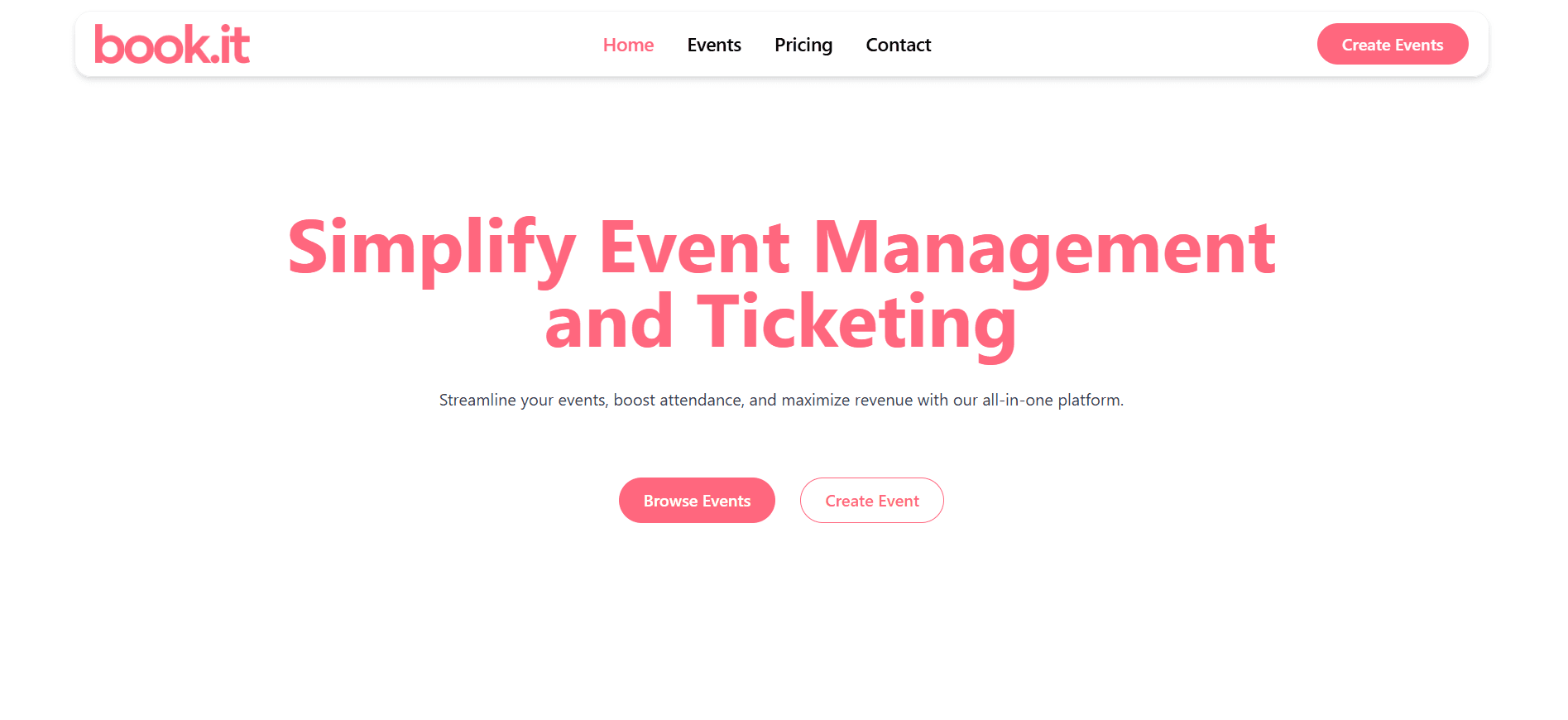
Bookit
A modern event ticketing and booking platform built with Next.js, Go, and PostgreSQL. Features include secure payment processing, QR code tickets, and interactive seating maps.
Bookit - Event Ticketing Platform
A modern event ticketing and booking platform built with Next.js, Go, and PostgreSQL. Bookit provides event organizers and attendees with a seamless experience for creating, managing, and booking events.
Features
- User-friendly event creation and management
- Secure payment processing with Stripe integration
- Interactive seating maps with real-time availability
- QR code ticket generation and validation
- Attendee management dashboard
- Analytics for event organizers
- Mobile-responsive design
Technical Implementation
The platform uses a hybrid architecture with Next.js for the frontend and some backend functions, while a Go application handles all transaction-related operations. PostgreSQL serves as the primary database for storing user data, event information, and transaction records.
// Example of transaction handling in Go
func ProcessTicketPurchase(ctx context.Context, order *Order) error {
    tx, err := db.BeginTx(ctx, nil)
    if err != nil {
        return err
    }
    defer tx.Rollback()

    // Reserve seats
    if err := reserveSeats(tx, order.SeatIDs); err != nil {
        return err
    }

    // Process payment
    if err := processPayment(order.PaymentInfo); err != nil {
        return err
    }

    return tx.Commit()
}
The Next.js application is hosted on Vercel, while the Go services are containerized with Docker and deployed on a Virtual Private Server. AWS S3 is used for secure storage of images, tickets, and other media assets.

Architecture Diagram
Challenges and Solutions
One significant challenge was ensuring data consistency across the hybrid architecture.
This was solved by implementing transaction boundaries and a message queue system to ensure operations complete successfully across both services.
Handling peak loads during popular event releases was addressed by implementing:
- Rate limiting on API endpoints
- Virtual waiting room system
- Database connection pooling
- Redis caching layer
Results
The platform successfully processes thousands of ticket transactions with an average response time under 200ms, even during high-traffic periods. The hybrid architecture provides both the developer experience benefits of Next.js and the performance advantages of Go for critical operations.
Related Projects
You might also be interested in these similar projects

A sustainability tracking platform that helps individuals and businesses monitor their carbon footprint, with gamification elements to encourage eco-friendly behaviors.

A developer community platform that combines code collaboration, mentorship matching, and technical content sharing with an integrated code playground.